How to vet a clinic abroad, including this one
We coordinate voice surgery in Istanbul, so treat this page with appropriate suspicion. The questions below are the ones that expose a weak operation — and they are the questions we would rather you asked us before you booked than afterwards.
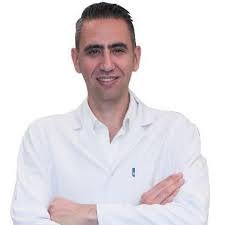
Start with the surgeon, not the clinic
The most common failure in medical travel is choosing a package rather than a person. Marketing sites describe facilities, hotels, transfers and “our expert team”, and never name the individual holding the instrument. That omission is the single most informative thing on such a site.
You are entitled to a name before you pay anything. With a name you can check a national medical register, look for publications, and see what the surgeon has actually treated. Without one you are buying an unknown.
In Türkiye, doctors are registered with the Ministry of Health and the Turkish Medical Association, and registration is verifiable independently of any clinic's website. Our own reviewer's profile is set out with that in mind, and our partner surgeons page explains the arrangement.
The specific questions
Ask these in writing, and keep the replies. A clinic that answers them plainly is demonstrating something; one that deflects is also demonstrating something.
Who is the surgeon, and what is their registration number?
A name and a number you can check yourself. “Our senior specialist” is not an answer.
What is their specialty, and is it this procedure?
Voice pitch surgery is laryngology. A general ENT or an aesthetic surgeon may be excellent at other things. Ask how many of these specific operations they perform in a year, and be wary of a number that sounds implausibly high.
Which operation, precisely, and why that one?
Glottoplasty, feminisation laryngoplasty, cricothyroid approximation and type 3 thyroplasty are different procedures with different risks and prices. A quote that just says “voice surgery” is not a quote.
Will my larynx be examined before I travel?
This is the question that separates a clinical pathway from a booking service. Discovering an unexpected finding on the morning of surgery, with flights paid for, is the worst possible moment. Remote assessment with a voice sample plus local laryngoscopy beforehand is a reasonable standard.
Is voice therapy included, and how many sessions?
Eight to twelve is normal. Zero is a red flag, because published series with the best outcomes all include structured post-operative therapy. A package without it is cheaper because it is unfinished, not because it is efficient.
What exactly is excluded from the price?
Ask for the exclusions list, not the inclusions list. It is far more informative.
What is the revision policy, in writing?
Who pays for assessment, theatre time and a return flight if the result is inadequate at six months? Get it before you book, not after.
What happens if there is a complication after I fly home?
Who do you contact, at what hour, in what language, and who treats you locally? This is the question people wish they had asked.
Can I speak to the surgeon before the day of surgery?
Not a coordinator. The person operating.
What would make you decline to operate on me?
The most revealing question on this list. Any honest surgeon has clear criteria and will name them. “We can help everyone” is a sales position, not a clinical one.
Warning signs
| Signal | What it usually means |
|---|---|
| No named surgeon anywhere on the site | You cannot verify anyone. The most serious single warning sign |
| Pressure to decide, or a discount expiring | Sales technique applied to surgery. Legitimate clinics do not run flash sales on your larynx |
| Guaranteed results, or a promised Hz figure | Nobody can guarantee a surgical outcome. Published series report ranges, not promises |
| Before-and-after audio with no context | Unverifiable, unrepresentative, and selected |
| No mention of voice therapy | Either they do not know it matters, or they have left it out to look cheaper |
| Surgery bookable without any assessment | A booking service wearing clinical clothing |
| No physical address or landline | Check it exists. This takes one minute on a map |
| Reviews only on the clinic's own site | Look for independent platforms, and read the mediocre reviews rather than the glowing ones |
| Everyone is a candidate | A genuine pathway turns people away, frequently toward therapy instead |
Costs: comparing quotes that are not comparable
Cheap quotes are usually not cheaper, they are narrower. The items that quietly fall outside a low package are consistent: voice therapy, pre-operative assessment, enough nights to cover the post-operative check, and any revision provision. Put two quotes side by side and answer the ten questions above for each; the gap usually explains itself. Our costs page breaks the price into its components, including the parts we do not charge for.
The practical side of travelling
- Travel insurance rarely covers elective surgery abroad, or complications from it. Read the policy specifically rather than assuming. Specialist cover exists.
- Do not fly the same day. Allow the nights the surgeon specifies, and build in slack for a delayed discharge.
- Bring someone if you can. After a general anaesthetic, in an unfamiliar country, in a second language, with a week of voice rest ahead — this is worth the extra flight.
- Plan the silence. Voice rest after pitch surgery is total, typically about a week. Notes app, whiteboard, food sorted, people told in advance. See vocal hygiene and voice rest.
- Get your records before you leave. Operative note, implant or technique details, medications, and a written follow-up plan — ideally in English as well as the local language. Your doctor at home will need them.
- Arrange follow-up at home first. Know who is examining you at six weeks before you fly out.
What Türkiye is and is not good for
An honest assessment, given our obvious interest. Türkiye has a large, established private medical sector, genuinely lower costs driven by exchange rates and local wages rather than by cutting clinical corners, high-volume surgeons in several specialties, and infrastructure built around international patients.
It is also a market with wide variation in quality and very active marketing, in which some operators are excellent and others are brokers. Both statements are true, and the difference between them is not visible from a website — which is the entire reason for the list above.
What Türkiye cannot change is the clinical logic. Voice therapy still comes before surgery. Most people who want a different voice do not need an operation. Trans men are still asked for twelve months of stable pitch on testosterone first. A cheaper price does not alter who is a candidate, and any clinic implying otherwise is selling rather than assessing. That is the argument set out on our feminisation and deepening pages, and it is the reason we would rather lose an enquiry than take one that should have gone to a therapist.
Keep reading
Sources
Figures on this page that come from published research are listed here with the study they come from, so you can check them yourself.
- Coleman E, et al. Standards of Care for the Health of Transgender and Gender Diverse People, Version 8 — Voice and Communication chapter. International Journal of Transgender Health, 2022;23(sup1):S1–S259.
- Evaluating the impact of Wendler glottoplasty and voice therapy on voice acoustics and quality of life in transgender women: a retrospective observational study. Journal of Voice, 2026. Single-surgeon series of 138 patients.
- Bultynck C, Cosyns M, T’Sjoen G, Van Borsel J, Bonte K. Thyroplasty type III to lower the vocal pitch in trans men. Otolaryngology–Head and Neck Surgery, 2021;164(1):157–159.
Frequently asked
How do I check a surgeon abroad is real?
Get a name and a registration number before you pay anything, then verify it yourself. In Türkiye doctors are registered with the Ministry of Health and the Turkish Medical Association, and registration is checkable independently of any clinic website. A site that never names the individual performing surgery is the most serious single warning sign.
What should be included in a voice surgery package?
The named surgeon and specific procedure, pre-operative laryngeal examination, theatre and anaesthesia, enough nights to cover the post-operative check, and a structured course of voice therapy — eight to twelve sessions is normal. Ask for the exclusions list rather than the inclusions list, because it is far more informative.
What are the warning signs of a bad medical travel clinic?
No named surgeon, pressure to decide or expiring discounts, guaranteed results or a promised Hz figure, no mention of voice therapy, surgery bookable without any assessment, no physical address, reviews only on the clinic's own site, and the claim that everyone is a candidate. A genuine pathway turns people away.
Should my larynx be examined before I travel?
Yes. This is the question that separates a clinical pathway from a booking service. Discovering an unexpected finding on the morning of surgery, with flights already paid for, is the worst possible moment. Remote assessment with a voice sample plus local laryngoscopy beforehand is a reasonable standard.
Is having surgery in Turkey safe?
Türkiye has a large established private sector, genuinely lower costs driven by exchange rates rather than clinical corner-cutting, and infrastructure built around international patients. It is also a market with wide quality variation and very active marketing. The difference is not visible from a website, which is why the questions above matter.
Does a cheaper price abroad change who is a candidate?
No, and any clinic implying otherwise is selling rather than assessing. Voice therapy still comes before surgery, most people who want a different voice do not need an operation, and trans men are still asked for twelve months of stable pitch on testosterone first.
Ask about your voice
Tell us where your voice sits and what you want it to do. A bilingual coordinator replies and asks for a short voice sample, then an independent partner laryngologist gives an honest opinion — including “therapy first” where that is the right answer.
By sending this form you confirm you have read the Privacy Notice and consent to your enquiry, including any health information you choose to include, being processed and transferred to Türkiye.